The EU needs a budget that allows it to meet its political ambitions. Yet member states cannot so far agree on the next long-term budget covering 2021-27 as spending priorities shift and the UK’s exit has left a EUR 60-75bn funding gap to be filled. Why are talks deadlocked and what is at stake? Scope Ratings analysts Alvise Lennkh and Levon Kameryan explain.
What is on the table?
The negotiations on the EU’s long-term budget for 2021-27 revolve around the European Council’s proposal to set the budget at 1.074% of the EU-27’s gross national income (GNI) or EUR 1,094.8bn. This proposal is considerably lower than the European Commission’s and the European Parliament’s previously suggested budget of 1.11% and 1.3% respectively, as well as the current 2014-20 budget of 1.16% of GNI. Negotiations are also focused on:
the proposed reduction in budget allocations to the EU’s agricultural (-14% vs the 2014-20 budget) and cohesion policy (-12%), which together account for almost 75% of the entire budget;
changes in the criteria for cohesion/structural funds, including making possible funding conditional on a member state’s application of the rule of law;
proposed funding increases to “new” policy areas, namely environmental protection, research and development, integration of migrants as well as security;
recalibrating rebates to net payer countries that compensate for their budgetary contributions; giving the EU more of its own resources to finance the budget, such as a tax on non-recycled plastic.
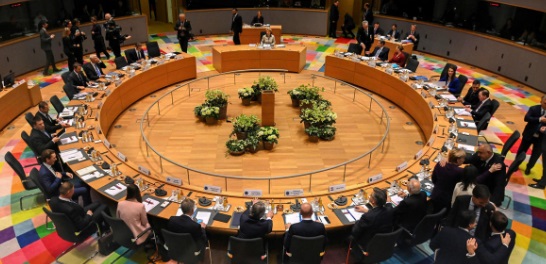
Compromise has proved elusive. This reflects the difficulty in reconciling the EU’s global ambitions put forward by the new Commission under President Ursula von der Leyen and member states’ willingness to finance them.
What are the key differences in member states’ negotiating stances?
The key dividing lines are between net contributors and recipients as well as between those historically receiving significant sums via the EU’s agricultural policy and so-called cohesion funds aimed at reducing economic and social disparities between member countries and those member states that do not.
Specifically, Central and Eastern European members (CEE), together with Spain, Portugal, Greece, Cyprus and Malta, are against reductions in cohesion and agricultural policy funding. Cohesion policies currently account for around 80% of structural fund (ESIF) allocations and half of public investments for many CEE countries. As a share of 2018 GDP, the financial allocation of ESIF for 2014-20 ranges from up to 8.6% for Slovenia (A/Stable) to up to 20.8% for Croatia (BBB-/Stable). Conversely, Germany, together with other net payers, including the Netherlands, Austria, Sweden, and Denmark, favour a budget cap of 1% of the EU’s GNI, and, in addition, support more funding for “new” policy areas. They have also opposed plans to reduce, let alone eliminate, the rebates that they currently benefit from and which in 2020 will amount to around EUR 6.4bn in aggregate.
What are the implications for the member states?
The official talks have been underway since May 2018 that, at 21 months, are longer than the 2014-20 budget negotiations. Further delays could postpone the start of programmes for the next budget cycle, including important infrastructure and educational projects as happened in 2014.
Member states, the European Commission and Parliament have an interest in striking a deal, even if more talks are necessary to reach a compromise in the areas of disagreement. With EU funding priorities changing reflecting the ambitious priorities, including funding for the European Peace Facility, a digital Europe and technological independence, more funding for “new” policy areas and cuts in traditional ones are likely, as well as some revisions of funding rules. However, it will be more difficult to reduce the rebates or increase the conditionality relating to the rule of law.
What are the implications for the EU as a supranational borrower?
Scope’s AAA-rating for the EU reflects its highly rated key shareholders, its strong institutional setup ensuring de facto joint and several support, a legally enshrined debt service priority combined with significant budgetary flexibility as well as its conservative cash management resulting in very high liquidity buffers. The budget negotiations are material for two main reasons:
Brexit will result in a higher dependence on fewer strong shareholders for budgetary resources;
the so-called budgetary margin - the difference between the maximum resources the EU can draw on from member states without the need for any subsequent decision by national authorities, the so-called ‘own resources ceiling’, and total expenditure - depends on the final budgetary agreement.
The EU’s ratings will remain unaffected by the UK’s departure. Scope also expects that the final outcome of the negotiations will ensure continued conservative liquidity management and budgetary practices, including elevated levels of liquidity buffers.







 Si (
Si ( No(
No(